EN
EN




What Causes Swelling in the Groin

What Causes Swelling in the Groin
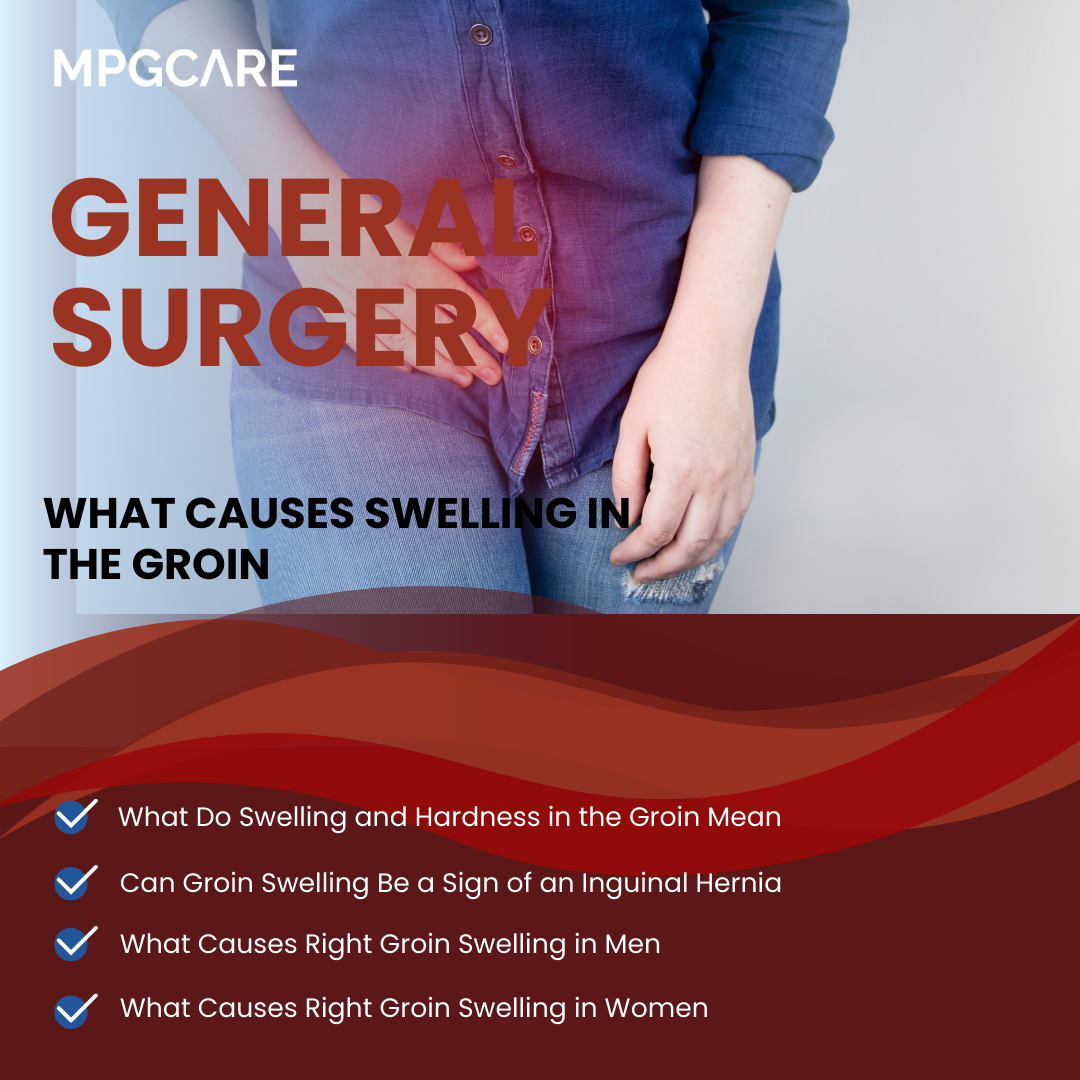
When swelling in the groin is noticed in daily life, the same question immediately comes to mind: What causes swelling in the groin?
Sometimes, swelling in the groin appears together with a simple feeling of strain that becomes noticeable after standing for a long time or lifting something heavy; sometimes it behaves like a mass that grows and shrinks during the day.
Especially if the swelling in the groin increases while coughing, straining, or exercising, correctly evaluating the underlying cause becomes important.
Swelling in the groin is not a disease name by itself; it can be a common sign of different conditions.
Swelling in the groin can be seen across a wide range, from common causes such as an inguinal hernia to enlargement of lymph nodes. For this reason, instead of waiting for it to “go away,” details such as when the swelling started, whether it causes pain, and whether it changes with movement can be guiding.
In physician evaluations performed at Medical Park Hospitals, the complaint of swelling in the groin is clarified by considering physical examination findings and, if necessary, imaging together.
What Does Swelling and Hardness in the Groin Mean
Swelling and hardness in the groin often causes the worry of “Could it be something serious?” Because swelling in the groin is not always felt the same way; sometimes it is a soft swelling that recedes when pressed, while other times the swelling in the groin is harder, fixed, and uncomfortable to the touch.

Feeling hardness along with swelling in the groin may carry different meanings depending on the source of the swelling.
For example, if the swelling in the groin grows and shrinks during the day, becomes more prominent with coughing or straining, and decreases when lying down, this may be related to a hernia. In contrast, if the swelling in the groin feels harder, like a “ball” in one spot, and is accompanied especially by pain, redness, or increased warmth, causes such as lymph node enlargement due to infections may also come to mind.
In some cases, swelling and hardness in the groin is due to a hair follicle inflammation or a subcutaneous abscess, which is a more superficial problem; sometimes it may be related to deeper tissues.
If the swelling in the groin has become hardened and is rapidly enlarging in a short time, causes severe pain, is accompanied by fever, or if symptoms such as nausea and vomiting begin, it should be evaluated without delay. At Medical Park Hospitals, the complaint of swelling in the groin is addressed together with physical examination findings, whether the swelling changes with movement, and imaging when necessary.
In this way, the question of what swelling and hardness in the groin means is answered clearly on an individual basis, and if needed, a treatment plan is created without delay.
Could Groin Swelling Be a Sign of an Inguinal Hernia
Groin swelling often brings to mind the question “Could this be an inguinal hernia?” and yes, in some people, swelling in the groin may be the first sign of an inguinal hernia. Especially if the swelling in the groin increases and decreases during the day, becomes more noticeable when standing, and is felt more clearly with coughing or straining, the likelihood of an inguinal hernia becomes stronger.
Some people describe a pulling sensation, burning, or mild pain along with the swelling in the groin; in others, the swelling in the groin is painless and is noticed only as a bulge that can be felt.
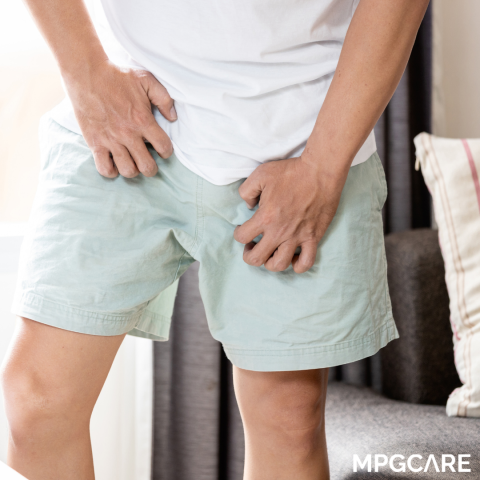
In an inguinal hernia, swelling in the groin is often “coming and going” with movement. Decreasing when lying down, receding with gentle pressure, or being more prominent at the end of the day may accompany this picture.
However, swelling in the groin does not always mean a hernia; different causes such as lymph nodes, muscle strains, or subcutaneous infections can also cause swelling in the groin. Therefore, it is important to evaluate it correctly rather than making a diagnosis “by eye.”
If swelling in the groin appeared suddenly and is accompanied by severe pain, hardness, redness, or symptoms such as nausea and vomiting, a medical examination is needed without delay.
At Medical Park Hospitals, the complaint of swelling in the groin is evaluated by physical examination in terms of an inguinal hernia; when deemed necessary, it is supported with imaging methods to clarify the relationship between swelling in the groin and a hernia. In this way, the question of whether groin swelling could be a sign of an inguinal hernia is answered reliably on an individual basis.
What Causes Swelling in the Right Groin in Men
When swelling in the right groin is seen in men, one of the most common conditions that comes to mind is an inguinal hernia. Because in men, situations that increase intra-abdominal pressure—such as heavy lifting, standing for a long time, chronic coughing, or constipation—can strain the groin area and make swelling in the groin more noticeable on the right side.
If swelling in the right groin grows and shrinks during the day, becomes more prominent when coughing, and decreases when lying down, a hernia is more strongly considered.
However, swelling in the groin is not limited to a hernia. Swelling in the right groin in men may sometimes be due to enlarged lymph nodes; in that case, the swelling in the groin may feel more like a “ball,” and tenderness to touch may accompany it.
A hair follicle inflammation on the skin, acne-like lesions, or a small abscess can also cause swelling in the groin and often runs together with redness and increased warmth. More rarely, muscle strains or soft tissue problems in the groin region may also be noticed as swelling in the groin.
If swelling in the right groin is rapidly enlarging, hardening, causing severe pain, or if additional symptoms such as nausea-vomiting or fever are present, it is important not to wait. At Medical Park Hospitals, the complaint of swelling in the groin is evaluated according to whether it changes with movement, the presence of pain, and examination findings, and is supported with imaging if necessary.
In this way, the question of what causes swelling in the right groin in men is answered clearly, and the correct treatment plan is established.
Causes of a Palpable Hard Lump in the Right Groin
When a palpable hard lump in the right groin is noticed, many people describe it as “like swelling in the groin, but harder.”
Indeed, swelling in the groin is not always soft; sometimes a palpable hard lump in the right groin can feel more well-defined, like a ball, and immobile. The reason for this varies depending on where the hardness originates.
One of the most common causes is enlargement of lymph nodes in the groin region. Especially if there is an infection or inflammation in the leg, skin, or genital area, lymph nodes can react and become palpable as swelling in the groin. This type of swelling in the groin is sometimes tender, and sometimes is noticed only as hardness.
Another common cause is subcutaneous infections; a hair follicle inflammation, acne-like lesions, or a small abscess can cause swelling in the groin and marked hardness, often accompanied by redness or increased warmth.
A palpable hard lump in the right groin may also be related to a hernia in some people. If the swelling in the groin increases with coughing/straining, grows by the end of the day, and decreases when lying down, a hernia becomes more likely. However, swelling in the groin does not automatically mean a “definite hernia”; for an accurate diagnosis, a physical examination is necessary.
At Medical Park Hospitals, swelling in the groin and a palpable hard lump in the right groin are evaluated through physical examination; if necessary, imaging methods are used to clarify the cause.
If the swelling in the groin has hardened and is rapidly enlarging, causes severe pain, or is accompanied by findings such as fever, nausea-vomiting, or redness, it is appropriate to apply without delay to Medical Park Hospitals. These symptoms may indicate a condition that requires urgent evaluation.
What Causes Swelling in the Right Groin in Women
When swelling in the right groin is seen in women, the question “Why did swelling occur in the groin, is it important?” usually comes up immediately. In women, swelling in the groin may sometimes be noticed after a daily strain; situations such as standing for a long time, intense exercise, sudden movements, or heavy lifting can make the groin area sensitive.
If swelling in the right groin becomes noticeable during the day, increases with coughing or straining, and decreases when lying down, the possibility of a hernia also comes to mind; although less common in women, an inguinal hernia is an important cause that can lead to swelling in the groin.
In addition, swelling in the right groin in women may often be related to lymph nodes.
In conditions such as a small wound on the leg, hair follicle inflammation on the skin, vaginal infections, or urinary tract infections, lymph nodes may react and be felt as swelling in the groin. This type of swelling in the groin may sometimes be hard and tender, and sometimes is noticed only as a small lump that can be felt.
Acne/abscess-like problems under the skin can also cause swelling in the groin and pain; redness and increased warmth often accompany it.
If the swelling in the groin is rapidly enlarging, hardening, causing severe pain, or if additional symptoms such as fever or nausea-vomiting are present, it is not appropriate to wait.
At Medical Park Hospitals, the complaint of swelling in the groin is evaluated together with examination findings, whether the swelling changes with movement, and imaging when necessary. In this way, a clear, individualized explanation is provided for the question of what causes swelling in the right groin in women, and an appropriate treatment plan is created.
What Causes Swelling and Hardness in the Left Groin
When swelling and hardness in the left groin is noticed, many people describe it as “there is swelling in the groin, but this time it feels harder.” Indeed, swelling in the groin may sometimes feel like a soft bulge, while at other times the swelling in the left groin may be harder, more prominent, and feel like a “ball” to the touch. This sense of hardness can mean different things depending on the source of the swelling.
One of the most common causes is enlargement of lymph nodes. Swelling in the left groin may occur especially if there is an infection or inflammation in the leg, skin, or genital area; in this case, swelling in the groin is often accompanied by tenderness.
A hair follicle inflammation, a subcutaneous abscess, or acne-like lesions can also cause swelling and hardness in the groin; redness, increased warmth, and pain with touch may accompany it.
In some people, swelling and hardness in the left groin may be related to a hernia. If swelling in the groin becomes more noticeable while coughing, straining, or at the end of the day; decreases when lying down; or recedes with pressure, the possibility of a hernia is evaluated.
However, swelling in the groin does not always mean a hernia; therefore, a physical examination is important for an accurate diagnosis.
At Medical Park Hospitals, the complaint of swelling in the groin is considered together with the size, consistency, change with movement, and accompanying findings; if necessary, it is clarified with imaging.
If the swelling in the groin has hardened and is rapidly enlarging, causes severe pain, or is accompanied by symptoms such as fever, nausea-vomiting, or redness, it is necessary to apply without delay to Medical Park Hospitals. These symptoms may indicate a condition that requires urgent evaluation.
What Can a Palpable Hard Lump in the Left Groin Suggest
A palpable hard lump in the left groin causes many people to check themselves and ask, “Is there swelling in the groin?” Because swelling in the groin may sometimes be noticed only as a mild bulge, while at other times a palpable hard lump in the left groin may be more distinct, well-defined, and feel like a “ball” when pressed. This alone does not establish a diagnosis; but it brings certain possibilities to mind.
One of the most commonly considered conditions is enlarged lymph nodes. A palpable hard lump in the left groin may appear as swelling in the groin after a small wound on the leg, hair follicle inflammation on the skin, infections in the genital region, or urinary tract infections.
This type of swelling in the groin may sometimes be tender, and sometimes is felt only as hardness.
Subcutaneous infections (acne/abscess-like) can also lead to swelling and hardness in the groin; redness and increased warmth often accompany it.
Another possibility is a hernia. If swelling in the groin increases with coughing/straining, becomes more prominent at the end of the day, and decreases when lying down, the possibility of a hernia is evaluated. However, swelling in the groin is not always a hernia; therefore, when a “palpable hard lump” is noticed, an appropriate physical examination is necessary.
At Medical Park Hospitals, swelling in the groin and a palpable hard lump in the left groin are evaluated together with examination findings, the change of swelling with movement, and imaging when necessary.
If the swelling in the groin is rapidly enlarging, causing severe pain, the hardness is increasing, or symptoms such as fever, nausea-vomiting, or redness accompany it, it is appropriate to apply without delay to Medical Park Hospitals. These symptoms may indicate a condition that requires urgent evaluation.
Frequently Asked Questions

What causes swelling in the groin?
Swelling in the groin can most commonly develop due to an inguinal hernia; in addition, enlarged lymph nodes (infection/inflammation), subcutaneous infections, and muscle strains can also cause swelling in the groin.
Is swelling in the groin a sign of an inguinal hernia?
Yes, swelling in the groin is common in an inguinal hernia. Especially when standing, coughing, or straining, swelling in the groin may become more noticeable.
What does it mean if swelling in the groin comes and goes?
If swelling in the groin grows and shrinks during the day and decreases when lying down, causes that become prominent with pressure, such as a hernia, are more likely. A physical examination is required to clarify it.
What could it be if swelling in the groin is accompanied by pain?
Swelling in the groin accompanied by pain can be seen with causes such as a hernia, inflamed lymph nodes, subcutaneous infection/abscess, or muscle strain.
Is swelling in the groin due to swollen lymph nodes?
Sometimes, yes. In infections, lymph nodes may enlarge and be felt as swelling in the groin; tenderness and pain may accompany it.
What causes swelling in the groin in women?
In women, swelling in the groin may be related to a hernia, or it may occur due to causes such as infections or subcutaneous inflammation.
What causes swelling in the groin in men?
In men, swelling in the groin is often associated with an inguinal hernia. In situations such as heavy lifting and straining, swelling in the groin may be more noticeable.
When is swelling in the groin dangerous?
If swelling in the groin suddenly hardens, causes severe pain, or if findings such as nausea-vomiting, fever, or redness are added, it should be evaluated without delay.
Which department should you visit for swelling in the groin?
For swelling in the groin, General Surgery is usually appropriate. Depending on suspicion, additional evaluation such as Urology or Gynecology may be needed.
Is an ultrasound necessary for swelling in the groin?
If deemed necessary after a physical examination, imaging such as ultrasound may be requested to clarify the cause of swelling in the groin.
How can you request a medical review in Turkey?
MPG Care can review your medical documents and coordinate the appropriate specialist within the Medical Park and Liv Hospital network.
WhatsApp: +90 850 259 55 53
This content is for information only and does not replace a medical consultation.




.png)