 EN
EN


Algology Specialist - Pain Doctor: Who They Are and When to Consult

Algology Specialist - Pain Doctor: Who They Are and When to Consult

Chronic pain directly impacts quality of life, sometimes making even daily tasks impossible. It is one of the most critical areas of modern medicine.
While often viewed as a temporary situation, when pain lasts longer than three months, it stops being just a symptom and becomes a disease in its own right.
This is precisely where algology comes into play. An algology specialist does more than just soothe the pain; they aim to identify the source of the pain and restore the patient's comfort.
Who is an Algology Specialist?

Pain is the body's alarm system. However, if this alarm rings constantly, there is a problem with the system.
Algology is a sub-specialty of medicine that deals with chronic and severe pain.
Algology as a Specialization
Algology is an advanced field of expertise, usually pursued by specialists in anesthesiology and reanimation, physical medicine and rehabilitation, or neurology.
A physician in this field focuses on the diagnosis and treatment of resistant pains occurring anywhere in the body that do not respond to standard treatments.
The algology unit works with a multidisciplinary approach, considering the patient's psychological and physical state as a whole.
Algology Specialist vs. Other Doctors — What is the Difference?
A standard branch doctor (such as an orthopedist or a neurosurgeon) focuses on fixing the structural abnormality causing the pain.
However, if the pain persists despite surgical intervention, or if the patient's condition is not suitable for surgery, an algology specialist steps in.
The algology physician controls the "sensation of pain" by intervening in nerve conduction pathways or using special interventional methods.
When to Visit a Pain Clinic?
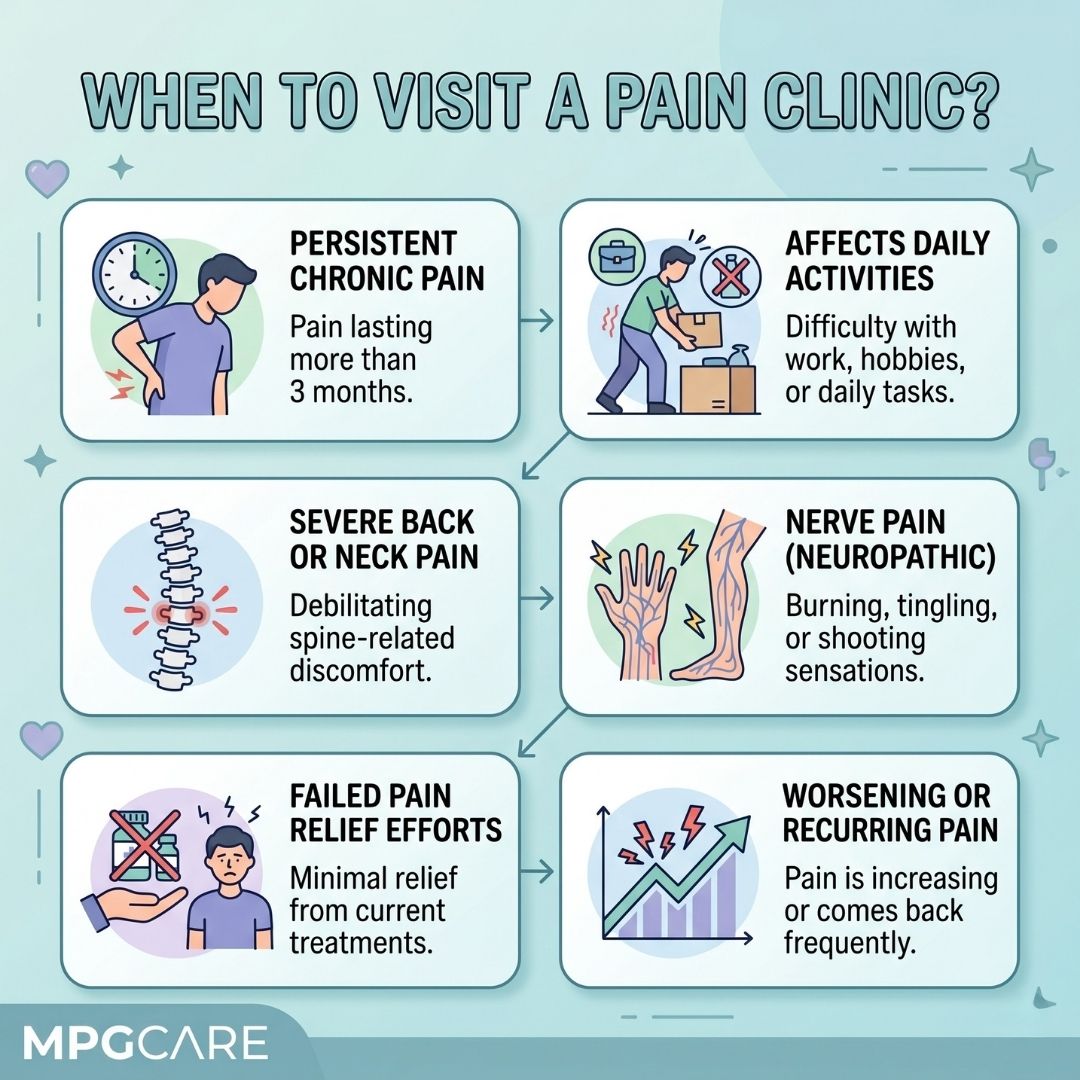
Not every pain requires a visit to an algology specialist. Generally, acute (newly started) pains are resolved by the relevant branches.
However, it is of critical importance to book an appointment at a pain clinic if the following conditions occur:
Chronic Back and Neck Pain
Persistent pain after hernia surgery (Failed Back Surgery Syndrome), spinal stenosis, or pain due to calcification are the most common issues treated by algology specialists.
Neuropathic Pain
This group includes pain that develops due to nerve damage, characterized by burning, stinging, or electric-shock-like sensations. Diabetic neuropathy or post-herpetic neuralgia (shingles pain) are typical examples.
Cancer-Related Pain
Severe pain related to cancer itself or treatment processes (chemotherapy/radiotherapy) significantly reduces the patient's quality of life. Algology offers advanced blockage methods to ensure these patients have a pain-free process.
Migraines and Headaches
For migraines resistant to medication, cluster headaches, or tension-type headaches, many modern methods ranging from Botox applications to nerve blocks are applied.
Muscle and Joint Pain
In cases of knee, shoulder, and hip calcification or widespread muscle pain like fibromyalgia, intra-articular injections and radiofrequency treatments can be life-saving.
Table 1: Consultation Processes Based on Pain Types:
| Pain Type | Duration / Character | Recommended Approach |
| Acute Pain | 0 - 30 Days (Injury-based) | Relevant branch (Orthopedics, Surgery, etc.) |
| Subacute Pain | 1 - 3 Months (Healing process) | Medication and physical therapy follow-up |
| Chronic Pain | 3 Months and Above (Persistence) | Algology Specialist Consultation |
| Neuropathic Pain | Burning, Stinging, Tingling | Algology and Neurology Collaboration |
Methods Used in Pain Clinics
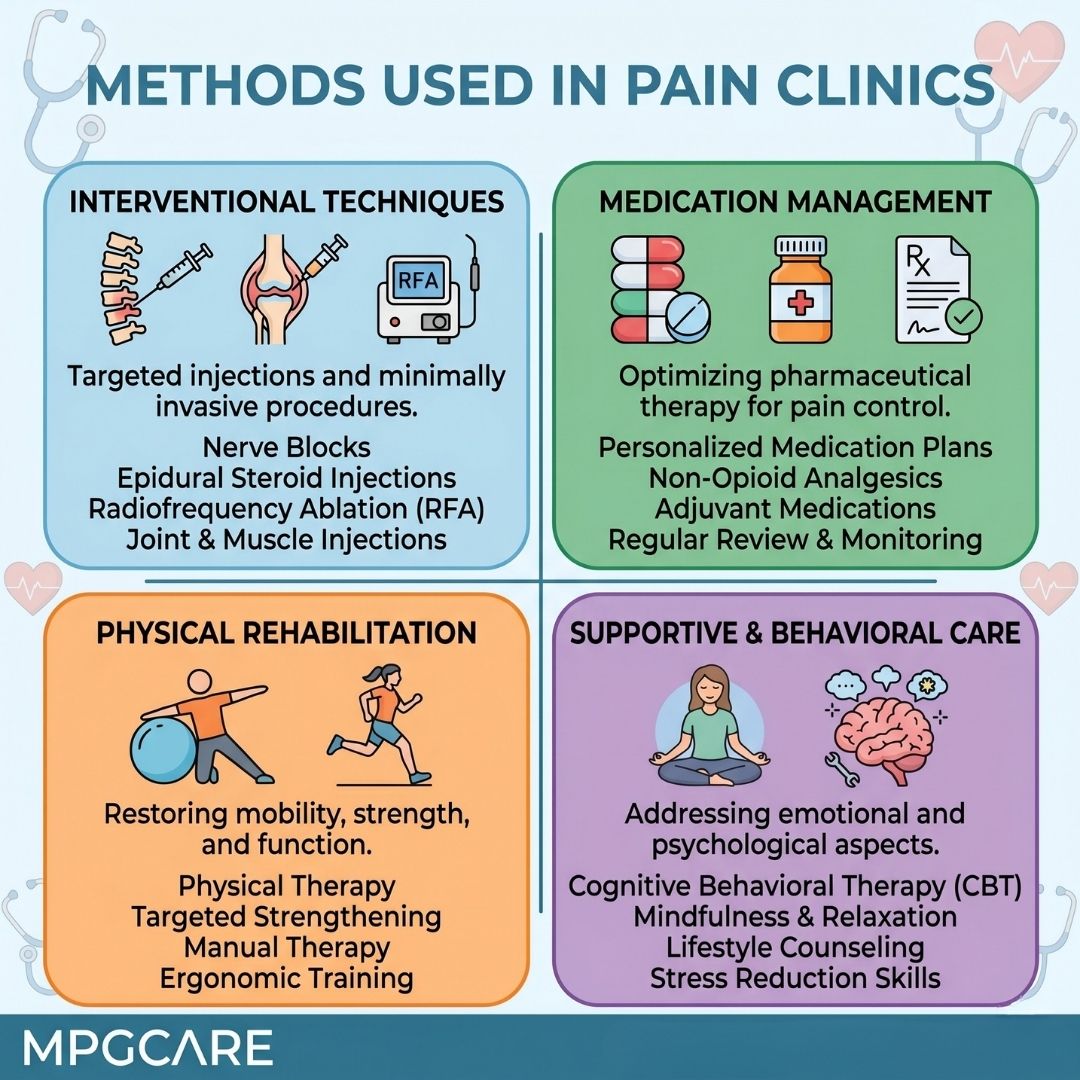
Algology specialists use a range of methods that go beyond standard painkillers. The choice of these methods is personalized according to the patient's medical history.
Medication
The drugs used in chronic pain are different from ordinary painkillers. Special molecules that regulate the pain threshold in the nervous system are prescribed in controlled doses.
Interventional Methods (Blocks)
These methods are the heart of algology applications. Under imaging guidance (fluoroscopy or ultrasound), the source of the pain is directly intervened:
- Epidural Injections: Delivering medication to the nerve root in back and neck hernias.
- Radiofrequency Thermocoagulation: Silencing the nerves that transmit pain using heat energy.
- Intra-articular Injections: PRP, stem cell, or hyaluronic acid applications.
- Pain Pumps (Spinal Cord Stimulation): Special devices placed in the spinal cord for very resistant cases.
Physical Therapy and Rehabilitation
Physical therapy processes are integrated into the treatment to strengthen the muscle structure and increase mobility for patients whose pain has decreased through interventional methods.
Table 2: Frequently Performed Algological Procedures and Estimated Duration of Effect:
| Procedure Name | Application Time | Onset of Effect | Average Longevity |
| Nerve Block | 15 - 20 Minutes | Immediate / 24 Hours | 3 - 6 Months |
| Radiofrequency | 30 - 45 Minutes | 1 - 2 Weeks | 1 - 2 Years |
| Epidural Steroid | 20 Minutes | 2 - 5 Days | 4 - 8 Months |
| Migraine Botox | 15 Minutes | 7 - 10 Days | 4 - 6 Months |
What to Do When a General Practitioner Is Not Enough?
Many patients visit different doctors several times for their pain, have tests done, but receive the answer "there is nothing wrong" or find that the prescribed medications do not work.
This situation indicates that the mechanism of pain itself is disrupted.
If:
- Your pain wakes you up from sleep,
- It restricts your daily social activities,
- Your surgical risk is high despite surgery being recommended,
- Existing treatments only provide a few hours of relief,
You should consult an algology specialist without wasting time. Algology views pain not as a "result," but as a "problem" that needs to be treated.
Treatment at Pain Clinics — MPGCare
Living with pain is not a destiny. Modern medicine has taken revolutionary steps in taking pain under control.
The algology services offered within MPGCare bring together the latest technologies and expert opinions to help patients step into a pain-free life.
The following steps are followed in the MPGCare pain management process:
- Detailed Analysis: The character of the pain, triggers, and past treatment history are examined.
- Personalized Plan: Every patient's pain threshold and biological structure are different; therefore, personalized interventional plans are prepared instead of standard prescriptions.
- Minimal Invasive Approach: By avoiding major surgeries as much as possible, high-impact results are targeted through entries as small as a needle hole.
- Process Monitoring: Changes in pain levels after treatment are regularly monitored and supported with lifestyle recommendations.
In our algology clinic, we stand by you with all the opportunities offered by modern medicine. Remember, your strongest weapon in the fight against chronic pain is to consult the right specialist at the right time. By meeting with an algology specialist, you can end the control pain has over your life.


.png)


