 EN
EN


Advanced Lung Cancer Treatment in Turkey: Minimally Invasive Surgeries and Oncology

Advanced Lung Cancer Treatment in Turkey: Minimally Invasive Surgeries and Oncology
Navigating an advanced lung cancer diagnosis requires specialized care and access to the latest medical breakthroughs.
Today, Turkey stands at the forefront of global healthcare, offering world-class, comprehensive treatment options for lung cancer patients.
By seamlessly combining state-of-the-art oncology—including advanced immunotherapy and targeted treatments—with highly precise, minimally invasive surgical techniques, leading Turkish medical centers provide personalized and effective care.
This guide explores how Turkey's multidisciplinary medical approach is offering new hope, faster recovery times, and an improved quality of life for patients worldwide.
Facing a Lung Cancer Diagnosis: Escape the Fear of Open Surgery and Long Waits
A lung cancer diagnosis hits hard, overwhelming patients and caregivers with anxiety over treatment options.
In Georgia, advanced robotic lung cancer surgery like the Da Vinci system is often unavailable, and there is a lack of multidisciplinary tumor boards.
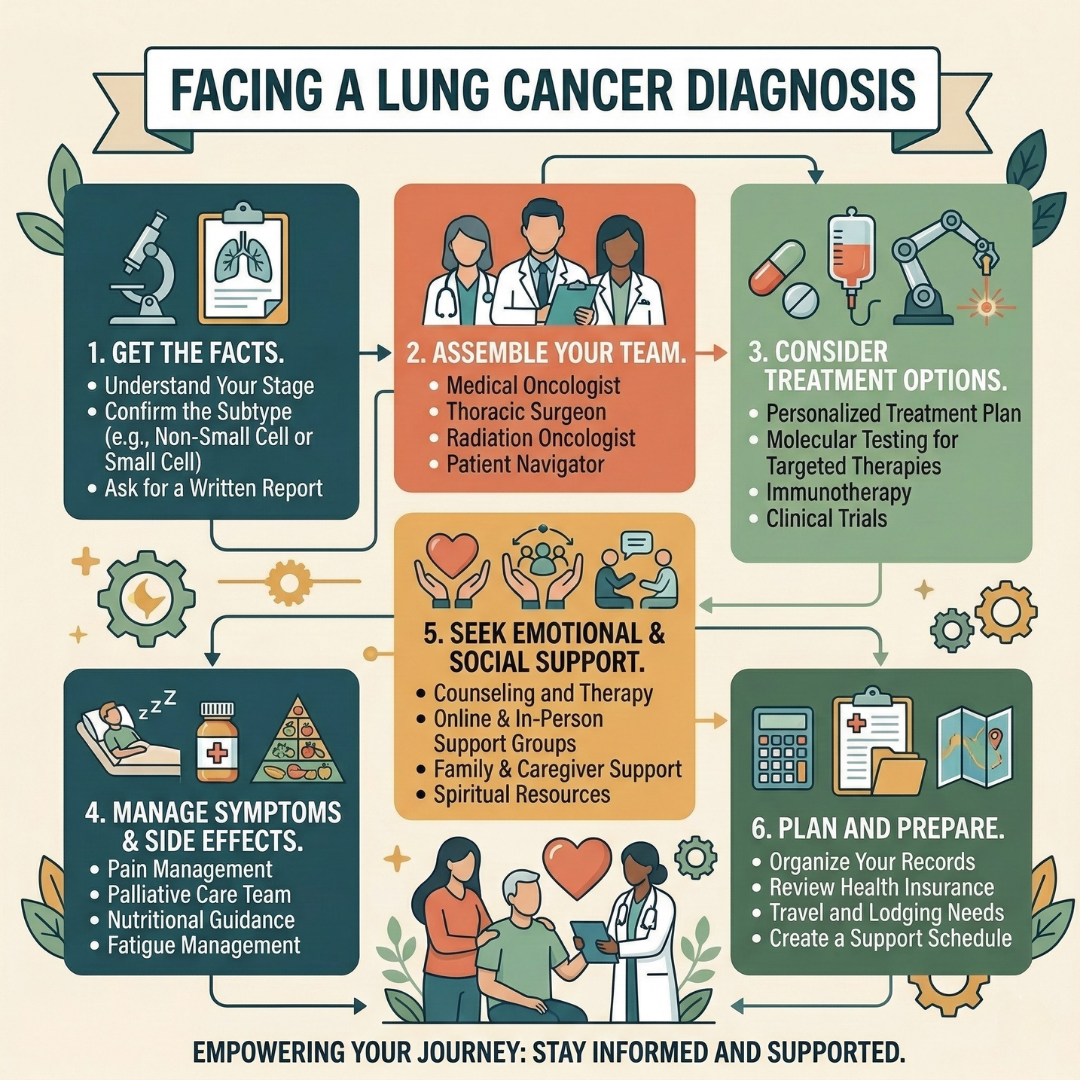
Meanwhile, Balkan families from Romania, Bulgaria, or Serbia hunt for affordable private oncology with cutting-edge tech.
The dread of traditional open thoracotomy looms large:
- A 15-20 cm incision with ribs forcibly spread.
- Intense pain managed by epidurals.
- 7-14 day hospital stays with high blood loss.
- Prominent scarring and 4-6 weeks (or longer) sidelined from work.
- Chronic post-thoracotomy pain that haunts some patients for months.
Enter minimally invasive lung cancer surgery—a lifeline for fast recovery.
VATS for lung cancer and Da Vinci robotic lung cancer surgery employ just 3-4 tiny incisions.
Surgeons gain 3D high-definition views and wristed instruments for precise maneuvers in tight spaces, bypassing rib spreading entirely.
VATS and Da Vinci Robotic Surgery: Minimally Invasive Treatment
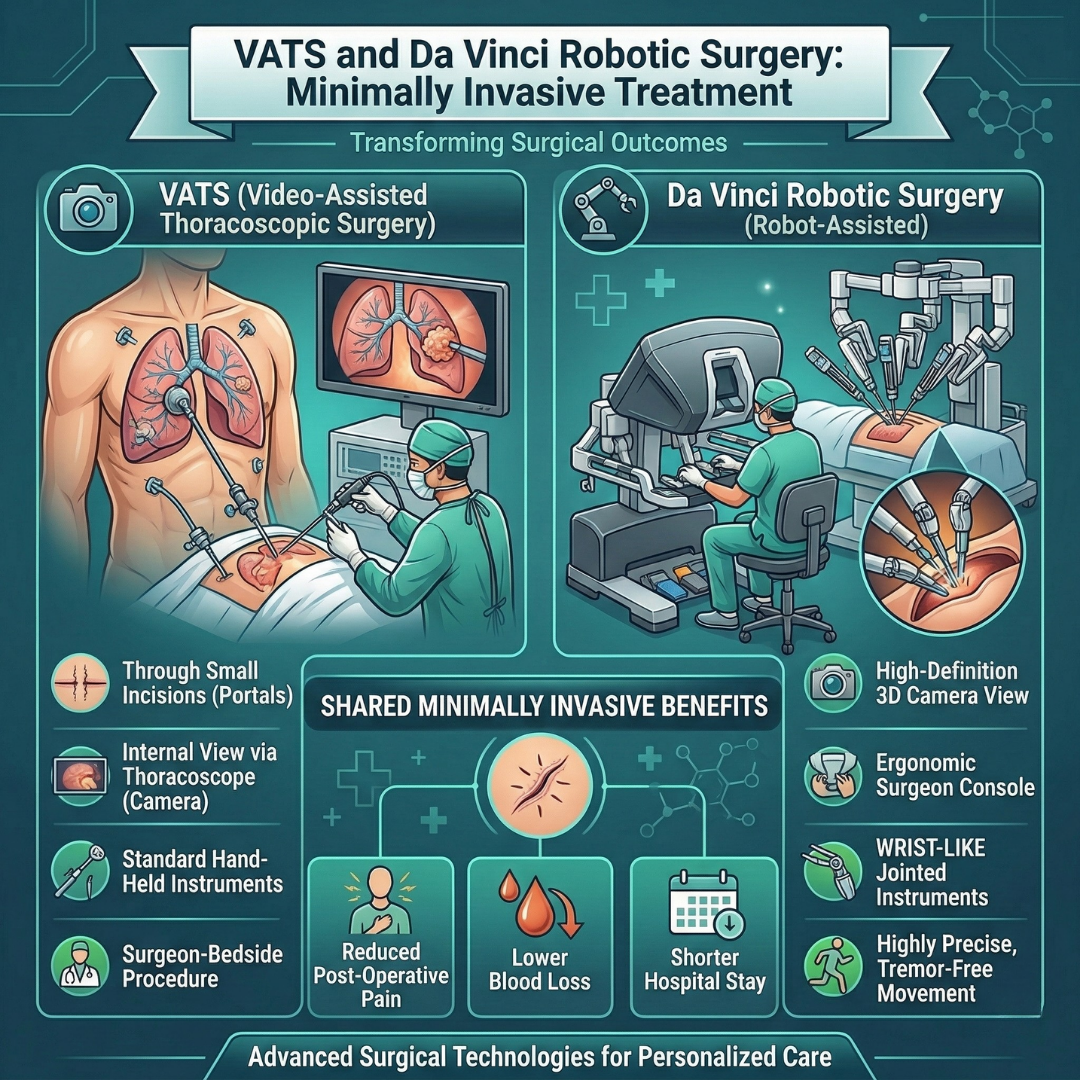
Understanding VATS (Video-Assisted Thoracoscopic Surgery)
VATS marks a pivotal advance in minimally invasive lung cancer surgery.
Surgeons make 3-4 small incisions, each about 2-3 cm, inserting a high-definition camera and rigid instruments.
Viewing a 2D monitor, they perform precise tumor resections like lobectomies without spreading the ribs apart.
This VATS lung cancer technique drastically reduces tissue trauma.
The Power of Da Vinci Robotic Lung Cancer Surgery
Da Vinci robotic surgery takes minimally invasive treatment further.
From a console, the surgeon directs robotic arms equipped with 3D magnified vision and fully articulated wristed instruments.
These enable intricate movements in confined chest spaces, ideal for segmentectomies or complex lymph node dissections.
Robotic precision lowers risks and enhances outcomes across stages.
Comparing Surgical Approaches
|
Feature |
Open Thoracotomy |
VATS |
Da Vinci Robotic |
|
Incisions |
15-20 cm single cut |
3-4 small ports |
3-4 small ports |
|
Post-Op Pain |
Very high (rib spreading) |
Low |
Lowest possible |
|
Hospital Stay |
7-14 days |
3-5 days |
3-5 days |
|
Return to Work |
4-6+ weeks |
2-3 weeks |
2-3 weeks |
|
Blood Loss |
High |
Low |
Lowest |
|
Conversion to Open |
N/A |
6.6-11% |
0.7-6% |
|
Lymph Node Sampling |
Good |
Good |
Superior |
Advanced Oncology: Targeted Therapies and Immunotherapy (Stages I-IV)
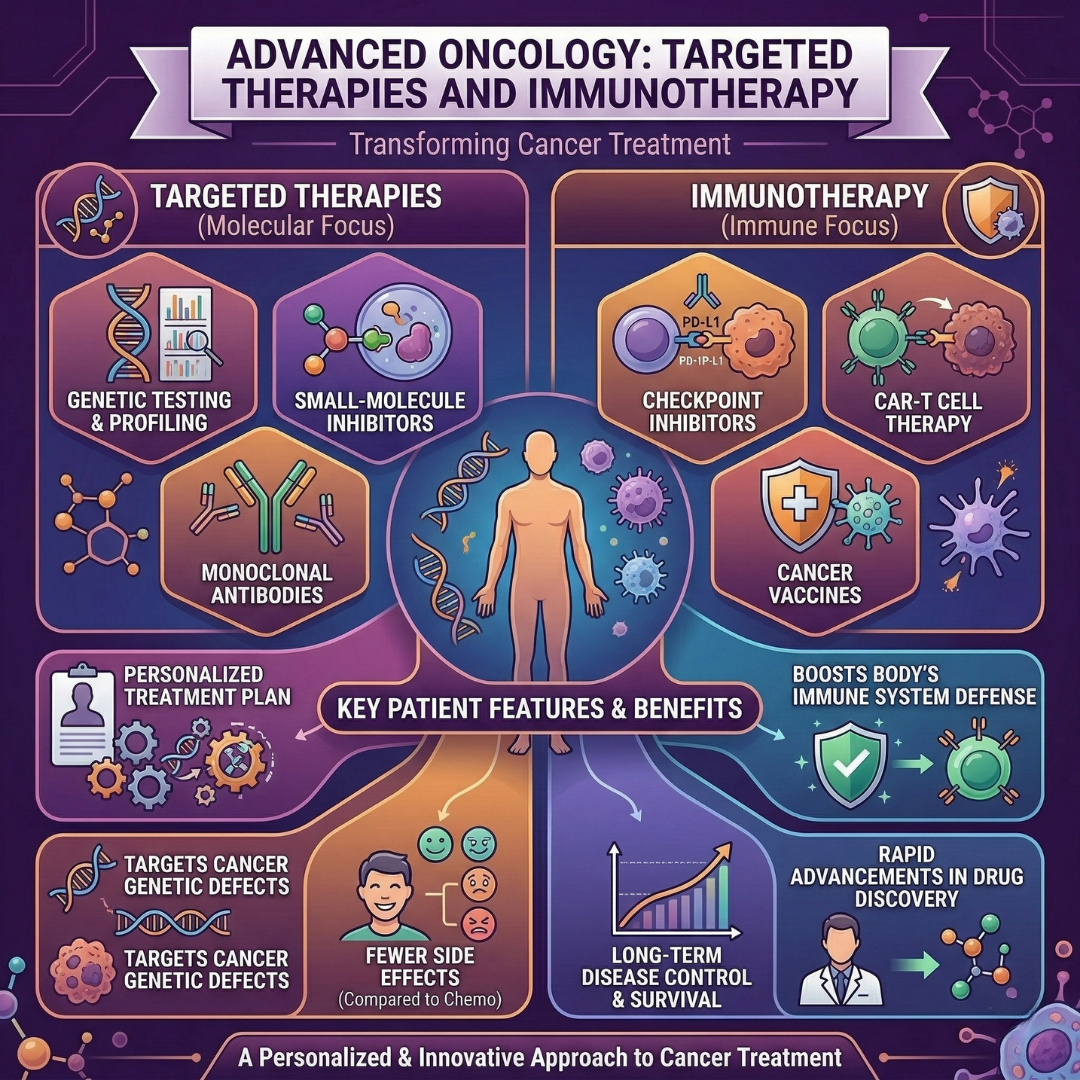
Beyond minimally invasive surgery, precision oncology elevates outcomes for NSCLC and SCLC across stages I-IV.
These approaches exploit cancer's unique molecular weaknesses, sparing normal cells and boosting survival rates significantly.
Targeted Therapy for Lung Cancer
Targeted lung cancer therapy homes in on actionable mutations identified via biopsy.
For example, Osimertinib (a third-generation EGFR inhibitor) revolutionizes care for NSCLC harboring EGFR mutations.
Post-surgery, adjuvant Osimertinib can extend disease-free survival by up to 80% per FLAURA trial data.
- Alectinib: For ALK rearrangements, offering superior CNS penetration.
- Crizotinib / Entrectinib: For ROS1/NTRK fusions, providing rapid tumor shrinkage.
- Sotorasib: For KRAS G12C mutations, filling prior gaps in smokers' NSCLC.
Immunotherapy Advances
Immunotherapy for lung cancer harnesses the immune system.
Drugs like Pembrolizumab (Keytruda) block PD-1 receptors, countering tumor evasion. For PD-L1 ≥50% metastatic NSCLC, it yields excellent response rates.
For aggressive SCLC, combining immunotherapy like Atezolizumab with chemotherapy prolongs survival by months.
Why Choose Turkey and MPGCare for Your Treatment?
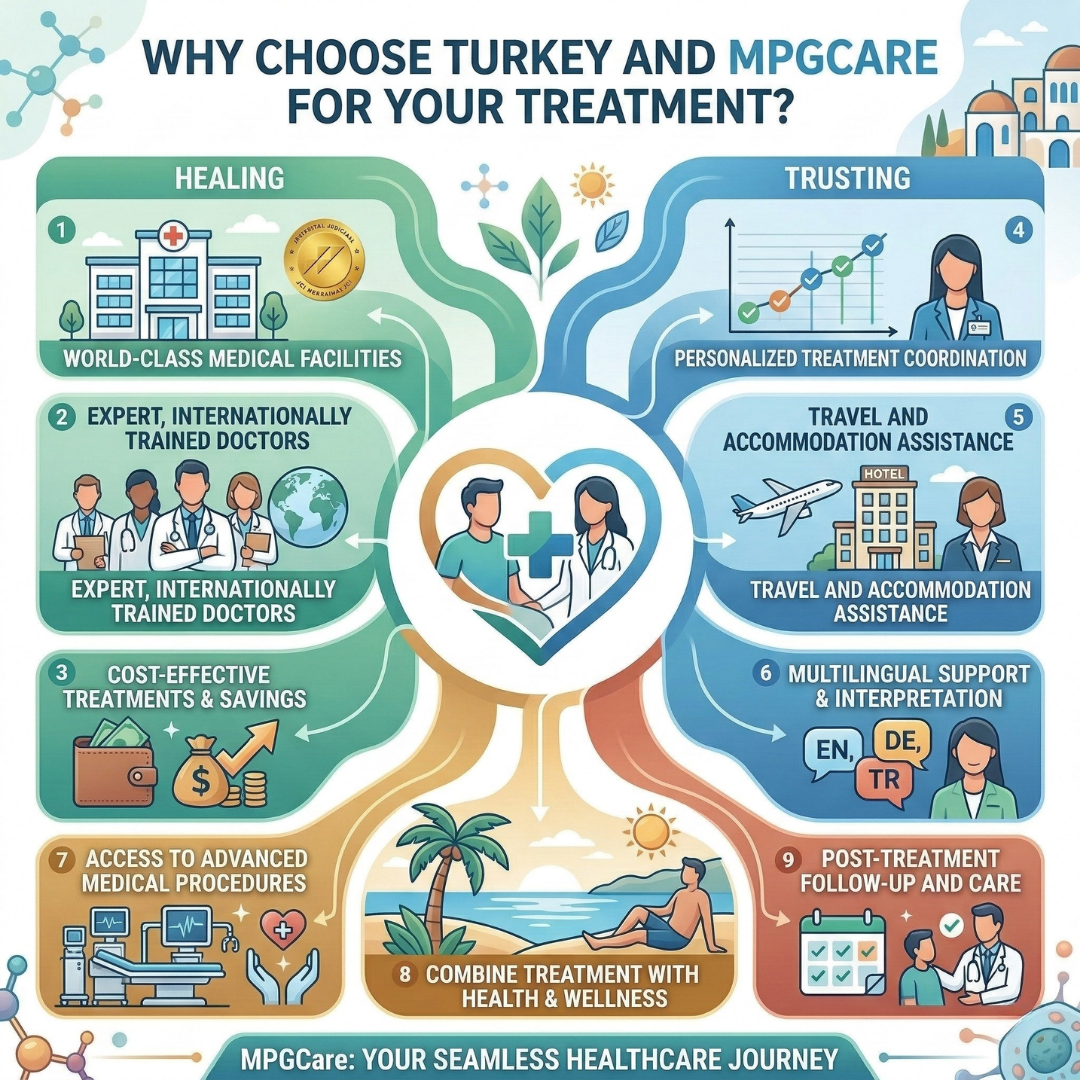
Affordable Costs and Immediate Access
Turkey redefines lung cancer treatment by merging top-tier surgery with unbeatable value. Lung cancer robotic surgery costs in Turkey range from €15,000 to €30,000 all-inclusive.
This is 40-70% less than Western Europe (€50,000+), the US ($100,000+), or Balkan options.
Unlike NHS queues or German public systems, Turkey offers instant scheduling.
You can undergo minimally invasive surgery within days of arrival. High-volume, best lung cancer surgeons in Turkey complete thousands of procedures annually, achieving equivalent long-term survival to global benchmarks with incredibly low conversion-to-open rates (0.7-6%).
Your Free Second Opinion Path with MPGCare
MPGCare partners with JCI-accredited elite centers, handling all logistics.
Georgians can visit our Batumi office for face-to-face consultations, while international patients receive full remote support.


.png)


